
Hopping Between Okinawa’s Select Shops: Find Your Stylish Piece and Souvenirs After Getting to Know the City by Street Kart
“Okinawan souvenirs always seem to end up being the same stuff in the end”—ever felt that way? You open your suitcase to find a pile of snacks and keychains that look just like everyone else’s. You went all the way there, yet nothing in your hands really captures the feel of the place. This is actually a small dilemma that lots of people run into when they visit Naha.
But tucked away around the city are plenty of stylish select shops that rarely make it into the guidebooks. The catch is, it’s hard to know what’s where. Even if you stare at a map app, it won’t show you that one little shop down an alley, or the store with the understated sign. So here’s an idea worth trying: first get a feel for Okinawa’s streetscapes from a street kart, and then head off to shop in the area you’ve got your eye on. After tearing through the wind, strolling the streets somehow makes it easier to get a sense for which shops are worth a visit.
In this article, with the theme of “stylish Okinawan select shops,” we’ll introduce the areas worth exploring in Naha, plus how to build a street kart experience to enjoy before and after. If you don’t want to regret your souvenir choices, or you want to find a piece that’s truly you in Okinawa, read on for one way to spend your day.
Ukishima-dori and Kokusai-dori: Where Okinawa’s Style Gathers
When you’re hunting for stylish Okinawan select shops, one name that comes up often is Ukishima-dori in Naha. Step just one street off Kokusai-dori and the atmosphere shifts—you’ll find shops set in renovated old buildings and small storefronts lined with the owner’s personal touches. Accessories by Okinawan makers, clothing crafted from island materials, handmade leather goods. Just slow your pace a little, and personality starts to reach out to you from behind the shop windows.
A single item picked up here feels like it comes home with you along with the memory of “I could only have found this in Okinawa.” There’s a texture of that day and that place you won’t get from mass-produced goods. When you look back at the end of your trip, it’s often these kinds of purchases that stay with you. Business days and hours vary from shop to shop along Ukishima-dori, so if there’s a place that catches your interest, checking each store’s info in advance will make your visit go more smoothly.
There’s plenty to see along Kokusai-dori too. Beyond the standard sweets and awamori, recent years have seen a rise in shops carrying design-forward goods. You might picture it as the main tourist drag, but duck into the side streets and you’ll find shops with a more relaxed, curated selection. What left an impression on me in Okinawa were products that bring traditional bingata patterns into a modern form. Fabric goods and stationery that make those vibrant colors easy to weave into everyday life are easy picks for gifts, too. These “tradition meets modern” items feel right whether you’re buying them for someone else or for yourself.
The area around Kokusai-dori gets a lot of foot traffic and can be crowded depending on the time of day. If you want to browse at a leisurely pace, aiming for early morning or weekdays might make it easier to take everything in. Strike up a little conversation with the shop staff and they may tell you what materials a piece is made of and which maker’s hands crafted it. An item you choose after learning that backstory brings a little of Okinawa back with you every time you use it.
Finding Long-Lasting Tableware on Yachimun-dori
Another spot worth dropping by is Tsuboya Yachimun-dori. Yachimun is the word for Okinawan pottery. Along the cobblestone street, kilns and tableware select shops line up, and you can pick up thick, rounded pieces and plates that show off indigo and amber glazes beautifully. If you’re stumped on souvenirs, tableware you can use at the dinner table every day is a great choice. It lasts a long time, and being able to remember Okinawa each time you use it makes it a pretty wonderful purchase.
Since tableware takes some care to carry due to its weight and size, I’d recommend stopping by in the latter half of your itinerary and having it carefully packed that same day. Some shops will even add a note about the maker’s name or the kiln’s characteristics, so the time you spend choosing becomes a travel memory in itself. A mug or a small plate is easy to carry home and makes a friendly first piece of yachimun. The cobblestone alleys have a lovely charm, but having comfortable walking shoes will put you at ease, so it’s worth giving a little thought to your footwear for strolling the streets.
Taking In Okinawa’s Streets with a Street Kart
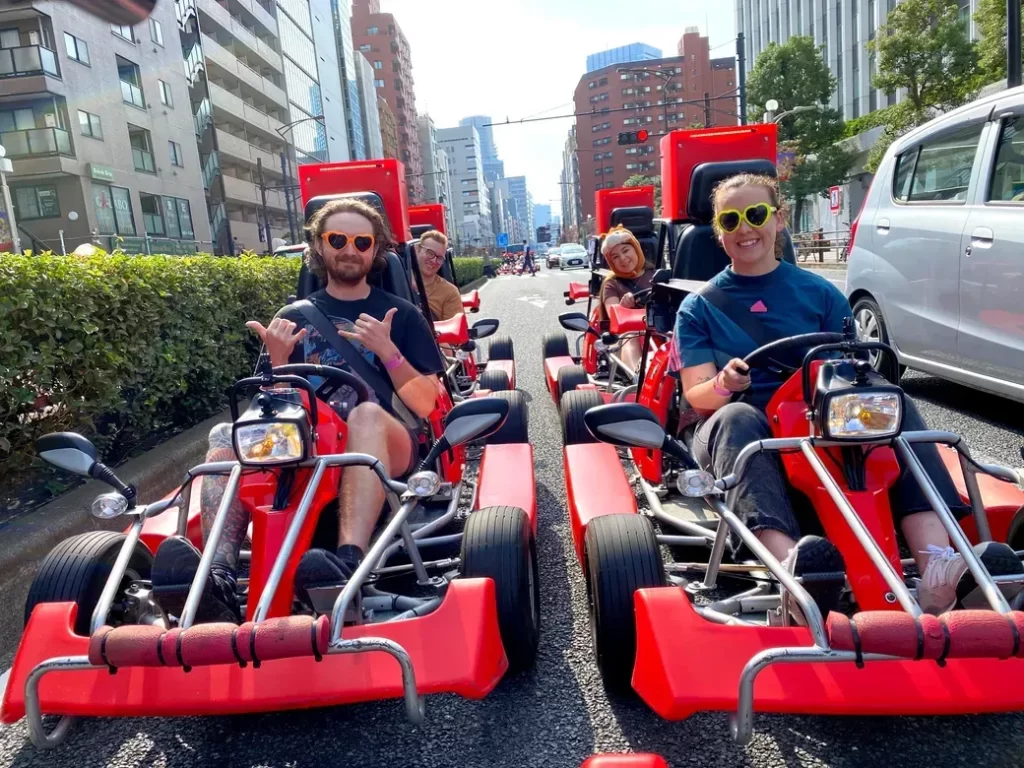
This is where the street kart comes in. Getting a sense of distances from a map app is fine, but actually driving and letting your body learn the flow of the scenery makes the shopping afterward go much more smoothly. The vastness of the Okinawan sky as you look up from the open-air driver’s seat, the wave of a passing pedestrian’s hand, the salt-tinged breeze. “I was nervous at first, but once we got going I couldn’t help but smile”—that’s the kind of thing some participants say.
Here’s the important part: the street kart runs as a guide-led tour, and the route is set in advance. It’s not a free-for-all where you zip around wherever you like. That’s exactly why, even on a first visit to Okinawa, you can relax and get a feel for the city’s geography. Enjoying the shopping itself at your own pace before and after the tour is a nicely balanced way to put your day together. Learning the city’s outline with your body first means that in the afternoon you can move on instinct—”that street was over this way”—and make the most of your limited time there.
Since it’s an experience on public roads, there are conditions for taking part. Participation is open to those 18 and over, and driving requires a valid driver’s license recognized in Japan. The conditions regarding license types and the documents needed for participants coming from abroad are summarized on the kart.st page, so giving it a read before you set out will make the day’s flow easier to follow. For clothing, choose something easy to move in and comfortable in the wind for the season, and you’ll enjoy the passing scenery even more.
Street Kart as an Option
Here are a few features to consider when choosing Street Kart. First, it’s run by guides trained to lead foreign drivers. Even if you’re not confident in Japanese, being able to get guidance in English is reassuring. The official website supports 23 languages, so gathering information before booking is easier to do in something close to your native tongue.
Also, the setup of nine locations across Tokyo, Osaka, and Okinawa (7 in Tokyo, 1 in Osaka, 1 in Okinawa) makes it easy for first-timers to take that first step. With bases in multiple regions, you can also plan an itinerary that combines cities beyond Okinawa.
And there’s the appeal that this is, above all, an experience for enjoying the city itself. Because Okinawa’s scenery takes the leading role, your photos come out great and the memories stick. It’s designed purely as an experience for feeling Okinawa’s streets and wind firsthand. Please refer to kart.st for the driver’s license conditions, and check the official site for details on the course, the day’s flow, and the latest locations and supported languages.
Making Your Okinawa Shopping a Full Day
If you’re going to explore Okinawa’s stylish select shops, I’d recommend a flow where you grab the big picture of the city by street kart in the morning, then walk Ukishima-dori, Kokusai-dori, and Yachimun-dori at your leisure in the afternoon. Learning the geography with your body first makes it easier to connect the shops you want to visit, even with limited time. When you have a sense of each area’s distances and atmosphere, it’s also easier to cut down on the hesitation over souvenir choices.
Here’s one example of how to put a day together. In the morning, take in Naha’s streetscapes by street kart and enjoy some local flavors for lunch. In the first half of the afternoon, hunt for maker’s clothing and accessories on Ukishima-dori, and in the latter half, check out bingata-patterned goods and classic souvenirs on Kokusai-dori. Toward evening, make your way to Yachimun-dori and pick out a piece of tableware for your dinner table. With a flow like this, it’s easier to gather a well-balanced mix of souvenirs with different characters—a stylish piece to wear, everyday tableware, and goods for gifts.
You can book at kart.st. For more detailed information on the course, what to bring, and participation conditions, take a look at the official site, kart.st. Weekends tend to fill up, so if your dates are set, booking early is the safe bet. Why not experience a new way of choosing souvenirs, on a day that begins after soaking up Okinawa’s breeze?
A Note on Costumes
We do not offer costumes related to Nintendo works, including “Mario Kart.” What we provide are properly licensed, commercially available costumes. For details, please check the official Street Kart website.

